Why build bathrooms onsite when they can be manufactured?
A housebuilder briefing on what actually happens inside a traditionally constructed bathroom — and what changes when the same bathroom is manufactured, tested and delivered complete.
Introduction
A bathroom may occupy only a small part of a new home, but delivering it traditionally requires an extraordinary number of individual operations, trades, materials, inspections and programme interfaces.
Bathroom pod manufacture changes the question. Instead of asking how efficiently a bathroom can be constructed onsite, perhaps the better question is whether it needs to be constructed onsite at all. At Walker Modular, bathroom production is treated as a controlled manufacturing process rather than a sequence of site trades.
Start with the bathroom your customer already expects
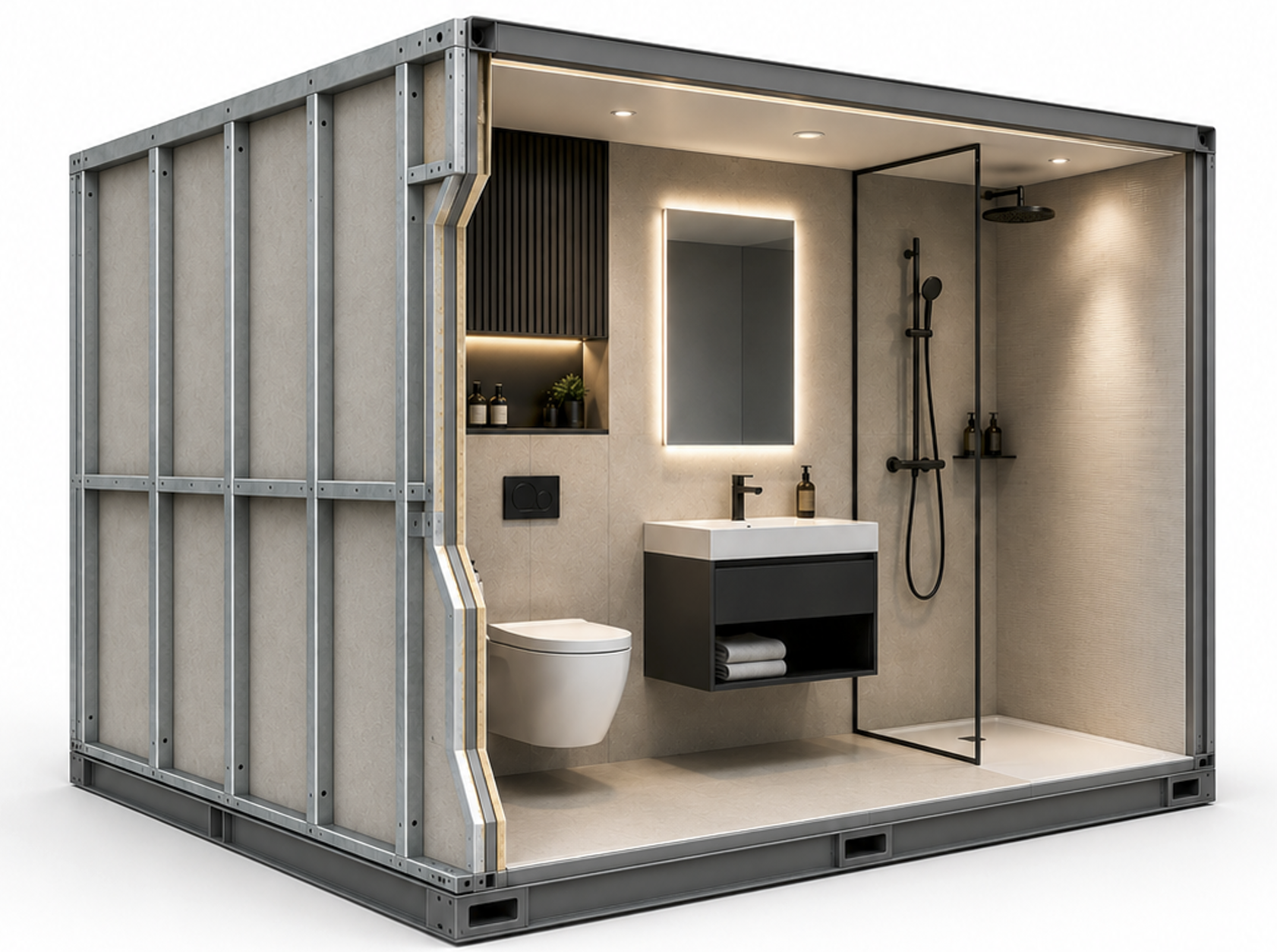
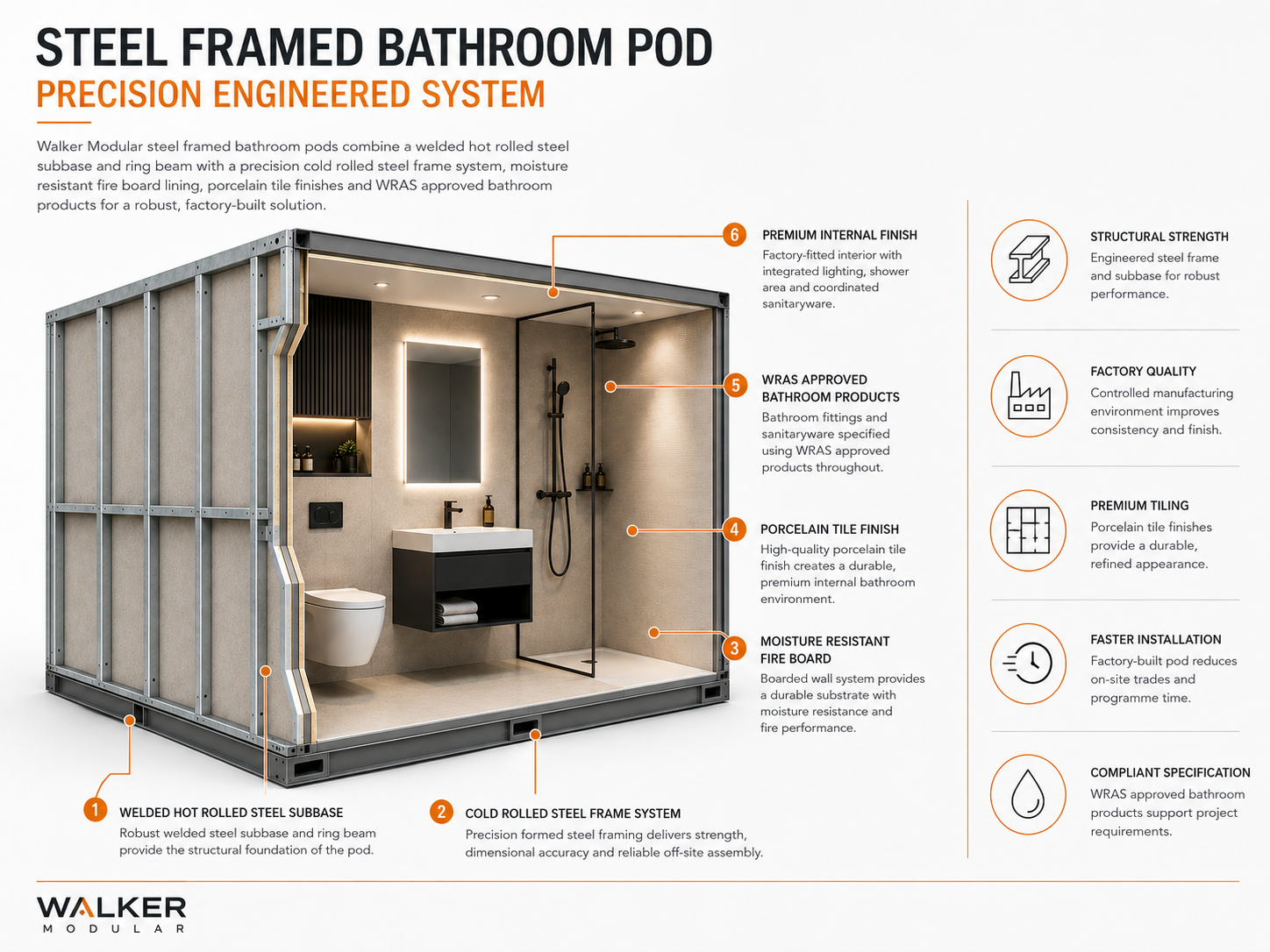
For a traditional housebuilder, the most straightforward route into bathroom pod manufacture is the steel framed tiled bathroom pod. It is engineered as a manufactured product, but it presents to the homeowner as a conventional, fully tiled bathroom — the same finishes, the same feel, the same expectations. Walker Modular's steel framed tiled bathroom pods allow housebuilders to retain the familiar bathroom finishes their customers expect while changing fundamentally how the bathroom is produced.
Keep the bathroom your customer expects. Change the way it is built.
Walker Modular's steel framed tiled bathroom pods are built around an engineered steel structure and finished in the factory. Depending on the specification, they can provide:
- Familiar tiled finishes and a conventional high-quality bathroom appearance
- Design flexibility across house types and layouts
- Engineered steel construction
- Controlled waterproofing and tanking
- Factory-installed sanitaryware and brassware
- Factory-controlled finishes
- Repeatable QA through manufacture
- Reduced onsite trade interfaces and reduced snagging exposure
- Finished bathrooms delivered ready for installation
Traditional look. Manufactured precision.
The finished homeowner experience does not need to feel modular. The customer sees a high-quality tiled bathroom. The difference is how it was produced — and who carried the risk of producing it. Walker Modular manufactures, tests and quality-assures the bathroom pod before it reaches the development.
A bathroom is a miniature construction project
Traditionally constructed, a single bathroom compresses a remarkable amount of construction into a very small footprint. The sequence typically runs through first fix, electrical work, drylining, waterproofing and tanking, flooring, tiling, sanitaryware installation, brassware, finishing, testing, snagging, cleaning and remedials.
None of these operations is difficult in isolation. The difficulty is that they are sequential, dependent and performed by different parties in a live site environment. Each operation introduces:
- Another trade interface
- Another programme dependency
- Another opportunity for variation
- Another inspection point
- Another potential delay
The visible cost of a traditionally constructed bathroom is only part of its real cost.
The unit-cost trap
Bathrooms are frequently benchmarked on materials and direct labour, because those are the numbers that are easiest to isolate. They are rarely the numbers that determine the delivered outcome.
Visible above the line
- Materials
- Direct labour
Below the line
- Site supervision
- Trade coordination
- Multiple visits
- Programme delays
- Material handling
- Storage
- Waste
- Damage
- Rework
- Snagging
- Remedial visits
- Management time
- Warranty exposure
The cheapest bathroom to build is not necessarily the lowest-cost bathroom to deliver.
The purpose of setting it out this way is not to attach figures to each line — every housebuilder's cost base is different. It is to make the point that direct labour and material cost alone do not represent the full commercial impact of how a bathroom is produced.
Construction becomes manufacturing
Bathroom pod manufacture does not simply relocate the same work. It converts a sequence of onsite construction operations into a controlled production process with a defined route, defined inspection points and a defined output.
Traditional onsite bathroom
- 01Plumber — first fix
- 02Electrician
- 03Dryliner
- 04Waterproofer / tanking
- 05Tiler
- 06Floor layer
- 07Sanitaryware installer
- 08Decorator and finishing
- 09Testing
- 10Snagging
- 11Remedials
Walker manufactured bathroom
- 01Design and engineering sign-off
- 02Procurement
- 03Manufacture
- 04Waterproofing and tanking
- 05Fit-out
- 06Testing
- 07Digital QA
- 08Delivery
Onsite construction manages variability. Manufacturing designs it out.
A factory environment gives greater control over the things a site cannot fully control: process, environment, material availability, workforce, inspection, sequence, quality and testing. Read more about how Walker Modular's production works on the manufacturing page.
Precision and repeatability
Volume housebuilding depends on repetition. The same house types, the same room layouts, the same bathroom, delivered again and again across a programme and across regions.
One approved design. Repeated with precision.
The objective for a large housing programme should be straightforward: bathroom number 400 is produced to the same controlled standard as bathroom number 1. The Walker Modular approach is designed around repeatability, controlled processes and traceable quality, and bathroom pod production supports that through:
- Repeatable dimensions from an engineered design
- Standardised processes and controlled work instructions
- Consistent material specifications across the programme
- Controlled installation methods
- Repeatable inspection at defined stages
- Digital QA records for each unit
- Reduced dependence on variable site conditions
Repeatability by design
One approved design
Engineered once
Waterproofing should be engineered in — not left to circumstance
Waterproofing is the single detail with the longest commercial tail. It is concealed almost immediately, it is expensive to revisit, and its performance is judged years after handover.
Competent waterproofing can absolutely be installed onsite — this is not an argument that it cannot. The argument is about repeatability and inspection opportunity. Onsite, tanking is one operation among many, performed in whatever conditions and sequence the programme allows. In the factory it is a defined stage in a controlled process.
Walker Modular's approach to bathroom pod waterproofing is built around:
- Controlled substrate preparation
- Specified tanking systems applied under factory conditions
- Bespoke shower sealing details developed in-house
- Controlled, repeatable application
- Inspection before finishes conceal the waterproofing
- Photographic QA records where applicable
- Factory testing prior to despatch
- Controlled interfaces and penetrations
Walker Modular has developed bespoke tanking and shower-sealing details that are difficult to reproduce consistently within normal onsite conditions — not because site teams lack skill, but because a factory can hold the same conditions and the same sequence every time.
Walker Modular's bespoke shower-sealing and tanking approach has delivered an exceptional leakage-performance record across its manufactured bathroom pods.
What lies behind the tiles matters
What the homeowner sees
- Tiles
- Shower
- Sanitaryware
- Brassware
- Finishes
What protects the housebuilder
- Engineered steel structure
- Controlled substrate
- Tanking
- Sealed shower interfaces
- Controlled penetrations
- Inspection at each stage
- QA records retained
The homeowner sees the finish. The housebuilder carries the risk behind it.
Materials and controlled specification
Manufacture allows material selection to be driven by engineering criteria rather than by what is available on a given day: repeatability, durability, water resistance, long-term performance, compatibility between systems, and controlled installation.
The claim here is deliberately modest. It is not that a factory automatically uses better materials. It is that a material system can be specified, procured and installed consistently across an entire programme rather than being exposed to greater variability from site to site and plot to plot.
Consistency is not simply choosing the right material. It is ensuring the right material is installed the right way, every time.
Remove the trade interfaces
The traditional bathroom sequence runs plumber, electrician, dryliner, waterproofer, tiler, floor layer, sanitaryware installer, decorator, testing, snagging, remedials. The bathroom pod route is considerably shorter onsite: manufacture, test, deliver, position, connect.
Fewer interfaces. Fewer dependencies. Greater certainty.
That is what plug and play means in practice — a tested, finished unit arriving to be positioned and connected. Fit and forget is a commercial idea rather than a promise of zero maintenance forever: it describes reducing the construction and early-life remedial complexity that a bathroom would otherwise generate.
Programme certainty
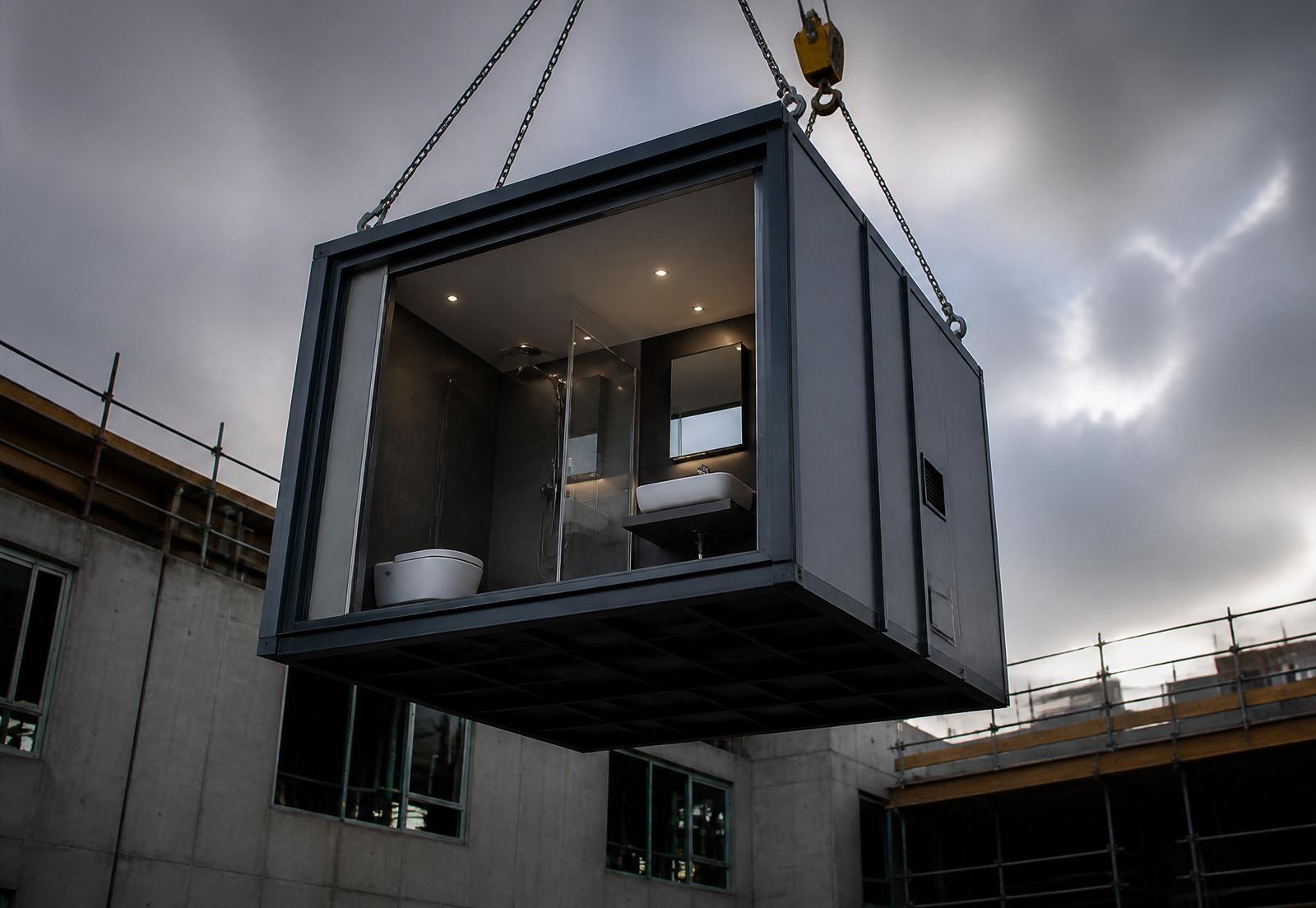
Because bathroom pod manufacturing happens away from the site, bathroom pods can be produced in parallel with the build rather than waiting for their slot in the sequence. Walker Modular schedules bathroom pod delivery to suit the build programme rather than the other way round.
Manufacture while you build. Deliver when you need it.
- Reduced dependence on sequential bathroom trades
- Bathroom labour moved away from the critical onsite path
- Improved planning certainty around a known delivery date
- Simplified site coordination
- Consolidated bathroom-related deliveries
- Reduced late-stage bathroom completion risk
The scale of any programme benefit depends on the development, the house types and the build sequence — it should be modelled scheme by scheme rather than assumed.
Digital QA and traceability
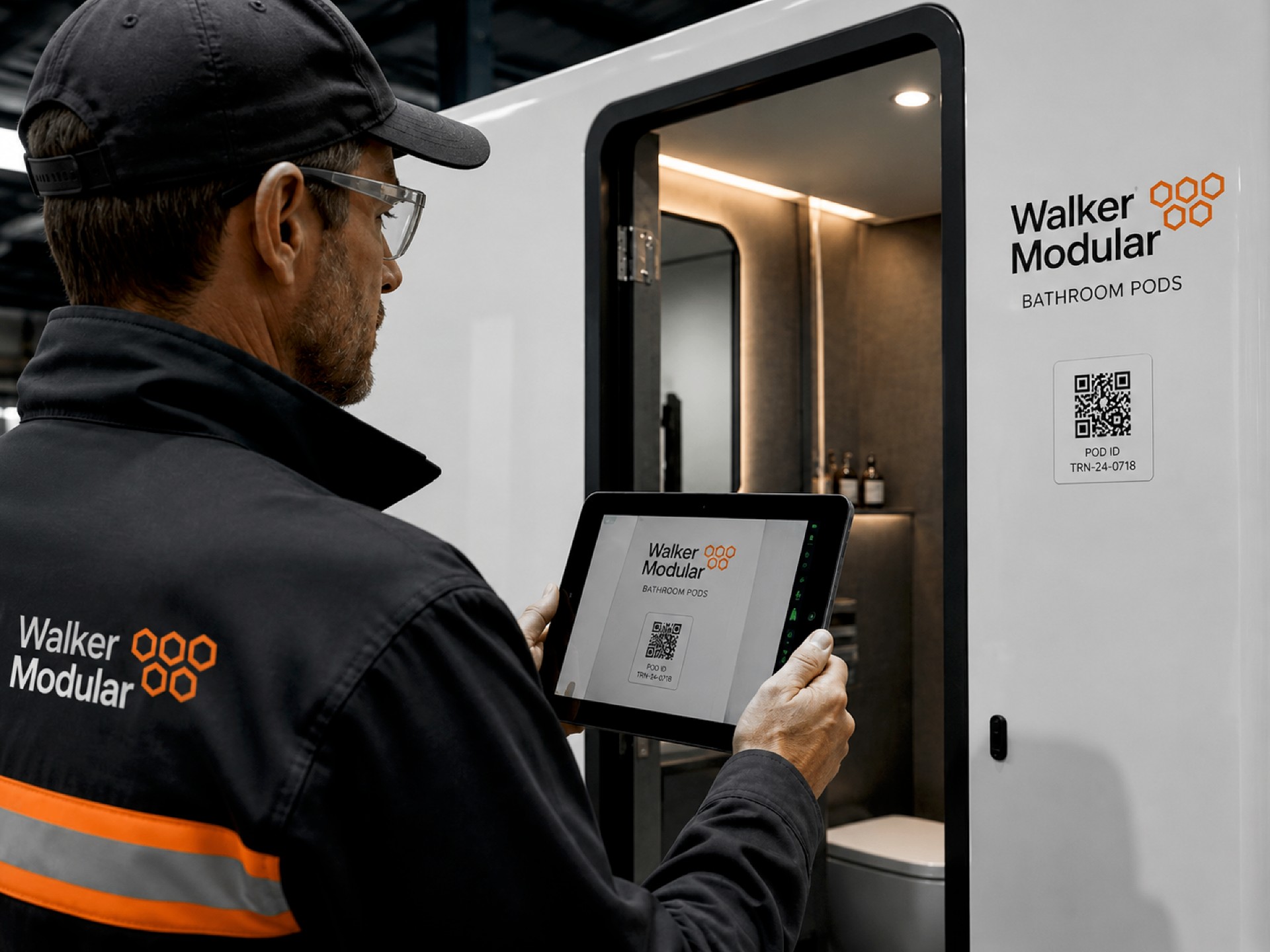
A manufactured bathroom pod can carry a record of how it was made. Unique identification, inspection records, photographic records, QA history, test records, traceability and digital handover information can all be attached to the individual unit.
How much evidence does a housebuilder normally retain showing exactly how the waterproofing behind every completed bathroom was installed?
That question is increasingly a Golden Thread question as much as a quality question. Walker Modular's digital bathroom pod quality assurance provides visibility into what actually happened during manufacture, unit by unit.
Two manufacturing systems. One bathroom pod strategy.
Steel framed tiled bathroom pods
The natural entry point for traditional housebuilders, and the right choice where priorities include a familiar tiled finish, architectural flexibility, house-type integration, premium specification, traditional bathroom aesthetics and factory-controlled waterproofing. Walker Modular's tiled bathroom pods are engineered to sit within standard house types without asking the customer to accept a different kind of bathroom.
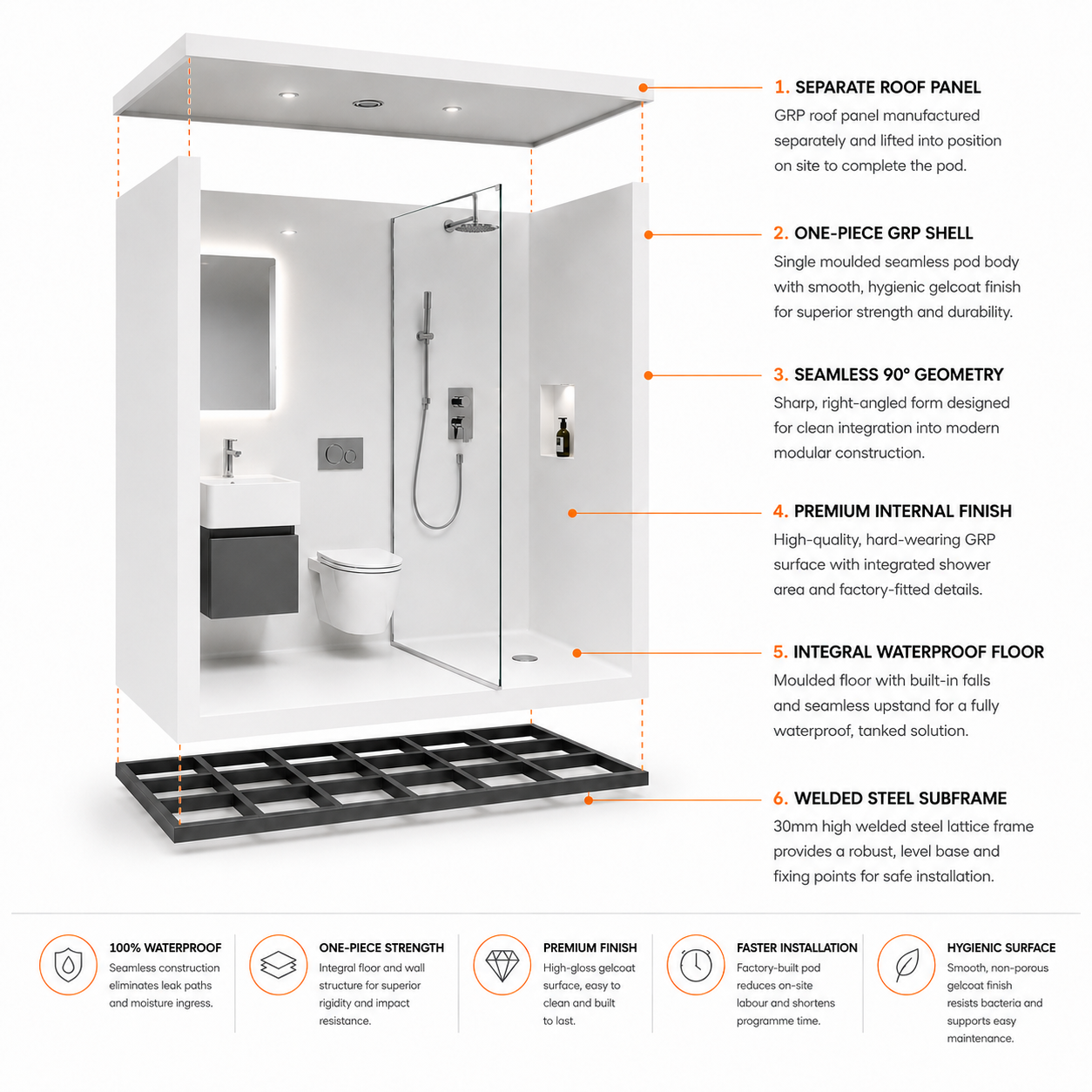
One-piece GRP bathroom pods
Walker Modular's second system suits programmes prioritising high repeatability, integrated construction, reduced joint complexity, high-volume manufacture, durability and efficient delivery.
The strategic decision is not simply GRP or steel. It is which manufactured bathroom system best fits the development.
Because Walker Modular manufactures both systems, the recommendation follows the project requirements rather than a single product technology. Mixed schemes are common — one system for the repeated core house type, another where the specification demands it.
Bathroom pod manufacture requires confidence in the manufacturer as well as the product
Moving a critical element of a major housing programme into an offsite manufacturing process is a supply-chain decision as much as a technical one. It requires confidence in manufacturing capacity, procurement capability, supply chain, engineering, systems, experienced people, quality infrastructure, project support, financial resilience and long-term stability.
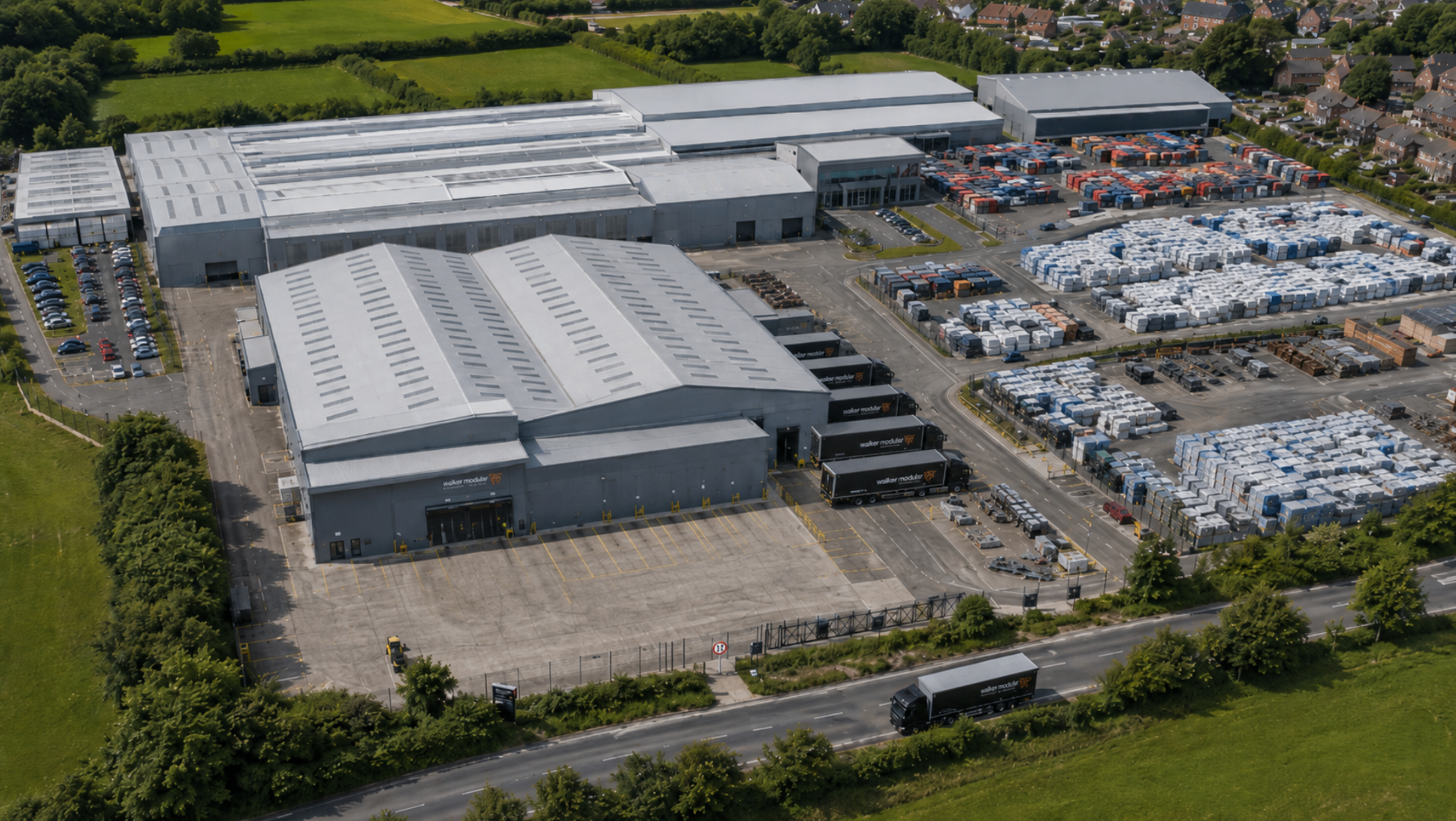
Walker Modular has spent more than two decades developing its bathroom pod manufacturing operation, and has delivered more than 250,000 bathroom pods from its UK factory. That history is the relevant evidence: the infrastructure, the people and the systems required to support repeated, long-running programmes.
A strategic manufacturing partner has to be capable of standing behind the programme for the long term.
Traditional onsite bathroom versus manufactured bathroom pod
| Traditional onsite bathroom | Walker Modular bathroom pod |
|---|---|
| Multiple trade interfaces | Integrated production process |
| Sequential site operations | Parallel factory manufacture |
| Variable site conditions | Controlled manufacturing environment |
| Site-applied waterproofing | Controlled waterproofing process |
| Multiple material deliveries | Consolidated procurement and logistics |
| Quality assessed across many trades | Integrated QA process |
| Greater repetition of site activities | Repeatable manufacturing process |
| Snagging at the end of the sequence | Inspection throughout manufacture |
| Limited records of concealed work | Digital QA and traceability |
| Greater management coordination | Simplified onsite interfaces |
The strategic question for housebuilders
Modern housebuilding already relies heavily on manufactured products and systems. Windows arrive finished. Kitchens arrive as manufactured assemblies. Roof systems, structural components, MEP products and a widening range of pre-manufactured assemblies are all designed and produced away from the plot.
It is worth asking why one of the most trade-intensive and quality-sensitive areas of a home should remain largely dependent on sequential onsite construction.
The question for major housebuilders may no longer be whether bathrooms can be manufactured. It may be why they should continue to be constructed traditionally onsite when Walker Modular can manufacture, test and deliver the complete bathroom pod.
Why build onsite when we can deliver it?